
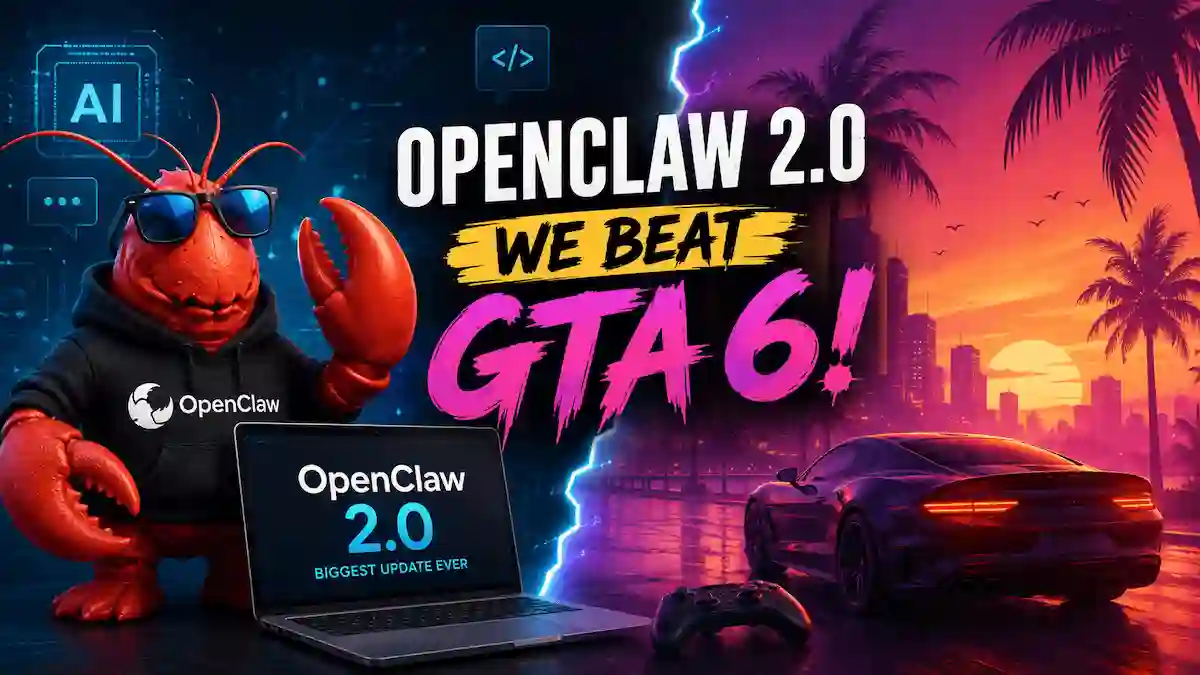
OpenClaw has officially launched its biggest update yet, and the project celebrated the release with a surprising GTA 6 joke.
The open-source AI agent platform has released OpenClaw 2.0, officially known as v2026.8.1. To mark the occasion, the project posted a playful message saying, “HA! We beat GTA6!”
The joke comes from the timing. GTA 6 is currently expected to launch in November 2026, while OpenClaw managed to release its major 2.0 update first.
Of course, OpenClaw isn’t actually competing with Rockstar Games. The GTA 6 reference is simply a fun way for the developers to celebrate getting such a major update out before one of the most anticipated games of the year.
But behind the joke, OpenClaw 2.0 is a serious update.
OpenClaw 2.0 Is More Than a Normal Update
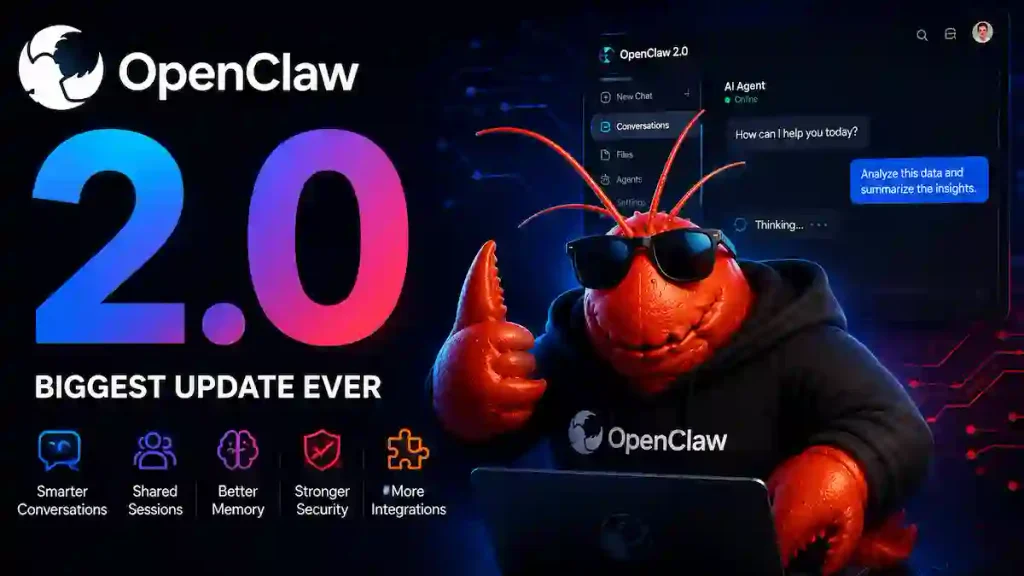
OpenClaw describes version 2.0 as its biggest update since launch.
The release includes major changes to the platform’s interface, onboarding system, sessions, memory, automation, plugins, security and AI model support.
The development effort behind the update is also significant. OpenClaw says the release involved hundreds of contributors and thousands of pull requests.
That makes OpenClaw 2.0 much more than a simple bug-fixing update.
The team has rebuilt several parts of the platform with the goal of making AI agents easier to use while still giving advanced users plenty of control.
Getting Started With OpenClaw 2.0 Is Easier
One of the biggest improvements comes during setup.
Previously, configuring an AI agent could require users to deal with models, API keys, credentials and configuration files before they could actually start using the platform.
OpenClaw 2.0 tries to simplify that process.
The updated setup system can detect AI services and models that may already be available on a user’s computer. This includes existing ChatGPT, Claude or Codex logins, API keys and local AI models running through platforms such as Ollama and LM Studio.
The goal is simple: if the required tools are already available, OpenClaw can make better use of them instead of forcing users to configure everything manually.
The new onboarding process can also verify the selected model before completing the configuration.
For beginners, this could make the first OpenClaw experience much less complicated.
OpenClaw 2.0 Gets a Rebuilt Browser Interface
The browser experience has also received a major redesign.
OpenClaw 2.0 puts conversations at the center of the interface while bringing files, approvals, settings and other tools closer to the main workflow.
The updated interface includes features such as conversation search, pinned chats, grouped sessions and live Markdown streaming.
There is also a new /btw command that allows users to ask a quick side question without disrupting the main conversation.
These changes may sound small individually, but they can become important when users are managing multiple AI tasks at the same time.
A cleaner interface makes it easier to find previous conversations and keep different projects organized.
Shared Sessions Could Make OpenClaw More Useful for Teams
Another notable addition is shared cloud sessions.
Previously, an OpenClaw session was primarily designed around the person running it. The new system allows another person to join an ongoing session while keeping the existing context.
That means a team member can potentially take over a task without forcing the AI agent to start again from the beginning.
This moves OpenClaw closer to being a collaborative AI workspace rather than simply a personal chatbot.
However, OpenClaw also warns users that shared-session controls should not be considered a full security boundary or multi-tenant isolation system.
That distinction will be important for companies thinking about using OpenClaw for sensitive work.
Session Storage Has Been Changed
OpenClaw 2.0 also introduces an important technical change that existing users should know about.
Session and transcript storage has moved to SQLite.
For everyday users, the change may happen mostly behind the scenes. However, it becomes important if someone later decides to downgrade to an older OpenClaw version.
OpenClaw warns that sessions created after the migration may not automatically appear in older versions that use the previous storage system.
Users should therefore make sure their important data is backed up before attempting a rollback.
OpenClaw Is Becoming a More Powerful AI Agent
The bigger idea behind OpenClaw isn’t simply chatting with an AI.
The platform is designed around AI agents that can perform tasks.
OpenClaw can be used for workflows involving email, calendars, messaging platforms and other connected services.
That is what makes the platform different from a traditional chatbot.
Instead of simply answering a question, an AI agent can potentially take action based on instructions.
OpenClaw 2.0 expands this idea with improvements to automation, sessions, memory and integrations.
New Memory Features Make Agents More Persistent
OpenClaw 2.0 also puts more emphasis on persistent conversations and memory.
The update introduces improvements designed to help agents recall previous conversations and retain useful information.
There are also changes to background memory processing and reusable lessons.
Another interesting change involves inactive sessions.
Under certain configurations, conversations can now remain available across periods of inactivity instead of automatically being reset.
For users who want an AI assistant that feels more continuous, this could become one of the more useful improvements in version 2.0.
Security Is Another Major Focus
Giving an AI agent more access to files, websites, applications and online services also creates new security concerns.
OpenClaw 2.0 introduces several security improvements, including clearer plugin trust information, permission controls, credential handling and security auditing features.
The platform can also inspect areas such as inbound access, network exposure, browser control and plugin configuration.
This matters because a powerful AI agent can potentially have a much larger impact than a traditional chatbot.
The more actions an agent can perform, the more important proper permissions and security settings become.
So, Did OpenClaw Really Beat GTA 6?
Well, technically, yes.
At least when it comes to the release date.
OpenClaw 2.0 launched on August 31, 2026, while GTA 6 is currently scheduled for November 2026.
That’s where the “We beat GTA 6” joke comes from.
The GTA 6 joke comes at an interesting time, especially as fans are still waiting for more information about the GTA 6 Online experience.
Obviously, there is no real competition between the two.
GTA 6 is a blockbuster video game from Rockstar Games, while OpenClaw is an open-source AI agent platform.
They are completely different products.
Still, the joke is clever because both have attracted enormous attention from their respective communities.
And for once, OpenClaw can claim that it released something major before GTA 6.
Final Thoughts
OpenClaw 2.0 is a genuinely substantial release.
The redesigned browser interface, easier onboarding, shared sessions, improved memory, expanded automation and security changes make this one of the most important updates the platform has released.
The GTA 6 reference may be the funniest part of the announcement, but the real story is what OpenClaw is trying to build.
The platform is moving beyond the traditional chatbot model and toward AI agents that can remember context, interact with services, perform tasks and work alongside users.
Whether OpenClaw 2.0 becomes a major milestone for personal AI agents remains to be seen.
But for now, OpenClaw has earned its joke.
It really did beat GTA 6 to the 2.0 update.